Creating a beautiful indoor garden does not require a large house or a spacious outdoor area. Even a small apartment can feel fresh, welcoming, and full of life with a few carefully arranged houseplants. One of the easiest ways to introduce greenery into a compact home is by decorating unused corners with indoor plants.
Plant corners make use of spaces that are often left empty, such as the area beside a sofa, an unused bedroom corner, a spot near a window, or the space next to a bookshelf. Instead of filling your apartment with large furniture and decorative accessories, you can use plants to add natural color, texture, and visual interest.
The best part about indoor plant corners is that they can be designed in many different styles. You can create a minimalist arrangement with two or three plants, build a vertical garden using shelves, display trailing plants in hanging baskets, or combine different foliage varieties for a layered appearance.
Small apartments require thoughtful planning because every square foot matters. Choosing compact plants, using vertical space, and selecting attractive containers can help you create a green corner without making the room feel crowded.
Here are 20 beautiful indoor plant corner ideas that can help you decorate your apartment with greenery while keeping the space organized and comfortable.
1. Create a Minimalist Indoor Plant Corner
A minimalist plant corner is perfect for small apartments because it introduces greenery without creating unnecessary clutter. Instead of using many different plants, choose two or three varieties with attractive foliage and arrange them in simple decorative pots.
Start with one medium-sized plant, such as a snake plant or ZZ plant, and place it in a corner beside a sofa or cabinet. Add a smaller plant on a short stand to create a difference in height.
Neutral-colored containers can make the arrangement look coordinated. White, beige, gray, and natural terracotta pots work well with many modern interior styles.
How to create the look:
- Select two or three plants with different leaf shapes.
- Use matching or complementary containers.
- Place the tallest plant toward the back.
- Add a small wooden or metal plant stand.
- Keep enough open space around the arrangement.
This design works especially well in apartments with neutral walls, simple furniture, and limited floor space.
2. Decorate an Empty Living Room Corner with Tall Plants
Tall indoor plants can turn an empty living room corner into an attractive focal point. Their height adds visual interest without requiring several small decorative accessories.
Plants such as snake plants, certain dracaena varieties, and suitable indoor palms can work well in this type of arrangement when their light requirements are met.
Place a tall plant beside a sofa, near a television unit, or next to a large window. Choose a container that complements your furniture and does not overpower the room.
A tall ceramic planter can create a modern appearance, while a woven basket adds a softer natural touch.
For a balanced arrangement, you can place a smaller plant on a nearby side table. This creates different levels of greenery without filling the entire corner.
Before choosing a tall plant, consider its mature size. Some varieties can grow considerably larger than they appear when purchased.
3. Build a Small Plant Corner with Wooden Shelves
Wooden shelves are a practical way to create an indoor plant corner in a compact apartment. They allow you to display several plants vertically instead of spreading containers across the floor.
Choose a narrow shelving unit that fits comfortably into the corner. Arrange plants on different levels and leave enough space between them for healthy growth.
Trailing plants such as pothos and heartleaf philodendron can look attractive on upper shelves, while compact plants such as peperomia can be placed on lower levels.
Ideas for styling wooden plant shelves:
- Use natural wood for a warm appearance.
- Add trailing plants to the upper shelf.
- Place compact foliage plants in the middle.
- Keep heavier containers on lower shelves.
- Use matching pots for a coordinated design.
A wooden shelf can also hold a few decorative objects, but avoid filling every available space. The plants should remain the main feature.
If your apartment has limited natural light, install suitable grow lighting above the shelves.
4. Create a Window-Side Indoor Garden
A window-side plant corner is one of the easiest ways to create a healthy indoor garden in a small apartment. Windows provide natural light, which is essential for most houseplants.
Place a narrow plant stand beside the window and arrange several plants according to their light requirements. You can combine a medium-sized plant with smaller containers to create a layered display.
Spider plants, pothos, peperomia, and suitable flowering houseplants may work well depending on the amount and intensity of light.
Avoid placing sensitive plants directly against hot glass or in areas exposed to cold drafts.
Tips for a beautiful window-side arrangement:
- Choose a window that provides suitable light.
- Use a narrow plant stand to save floor space.
- Arrange plants at different heights.
- Leave enough room for curtains and window access.
- Rotate plants occasionally for balanced growth.
A window-side garden can become a relaxing feature in your living room, bedroom, or kitchen.
5. Use a Corner Ladder Plant Stand
A ladder-style plant stand is an attractive solution for displaying greenery in small apartments. Its vertical design uses limited floor space while providing several levels for plants.
Choose a wooden or metal ladder shelf that fits the corner without blocking walkways. Place small and medium-sized plants on its steps, keeping heavier containers on the lower levels.
You can use trailing pothos on an upper shelf and compact plants such as peperomia or spider plants on the middle levels.
A ladder plant stand is also useful because it allows you to rearrange the plants whenever you want to change the appearance of your room.
For a natural interior, choose a wooden ladder stand with terracotta or woven planters. For a modern apartment, a black metal frame with simple white pots can create a clean look.
6. Add Hanging Plants to an Unused Corner
Hanging plants are an excellent choice when your apartment has very little floor space. They allow you to use empty ceiling and wall areas while keeping the floor clear.
Install a secure ceiling hook or wall-mounted bracket in a suitable corner. Use a lightweight planter with a trailing plant such as pothos, heartleaf philodendron, or spider plant.
Macrame hangers can add texture and create a relaxed decorative appearance. Simple metal or ceramic hanging containers are better suited to modern interiors.
For a layered display, use two hangers at different heights. Avoid overcrowding the corner because the plants need enough room to grow.
Always check the weight capacity of the mounting hardware, including the weight of the watered plant and container.
7. Design a Cozy Bedroom Plant Corner
An indoor plant corner can make a small bedroom feel more natural and welcoming. You do not need a large collection of plants to create an attractive arrangement.
Choose a quiet corner beside a dresser, near a window, or beside a comfortable chair. Place a medium-sized plant on the floor and add a smaller plant on a wooden stand.
Snake plants, spider plants, and suitable pothos varieties are popular choices for bedroom decoration. Select plants according to the available light and keep their watering requirements in mind.
Bedroom plant corner styling:
- Use soft neutral-colored pots.
- Combine one tall plant with a smaller plant.
- Choose a natural wood stand.
- Keep plants away from heaters and strong drafts.
- Avoid placing heavy hanging pots above the bed.
A simple arrangement can complement neutral bedding, wooden furniture, and soft lighting.
8. Create a Small Indoor Jungle with Layered Plants
If you enjoy a fuller green appearance, create a small indoor jungle using plants with different heights, leaf shapes, and textures.
Start with a larger floor plant as the main feature. Add medium-sized plants on stands and place small containers on a nearby shelf.
Trailing plants can soften the arrangement and connect the different levels of greenery.
For example, you can combine a snake plant, a spider plant, and a pothos in separate containers. Make sure the plants receive suitable light and have enough space for airflow.
How to build a layered plant corner:
- Use one larger plant as the main feature.
- Add two medium-sized plants on different stands.
- Place a small plant on a nearby shelf.
- Include one trailing variety.
- Choose containers with a consistent color theme.
Avoid placing too many plants close together. A crowded arrangement can make watering difficult and increase the risk of pest problems.
9. Use a Small Corner Plant Table
A small plant table can create an attractive indoor garden without requiring a large shelving unit. It is especially useful for apartments where floor space is limited.
Choose a compact round or square table that fits into an unused corner. Place one medium-sized plant in the center and add one or two smaller pots around it.
A wooden table creates a warm natural look, while a metal table can complement contemporary interiors.
For additional visual interest, choose plants with different leaf shapes. A compact peperomia, small spider plant, or trailing pothos can work well depending on the light.
Use a waterproof tray beneath the containers to protect the table from moisture.
A plant table can also be placed beside a reading chair or near a bright window.
10. Decorate a Corner with Modern Ceramic Planters
Ceramic planters can make even a simple plant arrangement look stylish. Their smooth surfaces, decorative shapes, and different colors allow you to coordinate your indoor garden with your apartment’s interior design.
Choose two or three ceramic pots in complementary colors. Place them in a corner with plants of different heights.
For a minimalist apartment, white and beige containers create a calm appearance. Dark gray or black planters can provide contrast against light walls.
You can also combine a large floor planter with smaller containers on a plant stand.
When selecting ceramic pots, make sure they have suitable drainage or can hold a removable nursery pot. Heavy ceramic containers should be placed on stable surfaces.
11. Turn a Reading Corner into a Green Relaxation Space
A reading corner becomes more inviting when it includes natural greenery. Plants can add color and texture while making a small apartment feel more connected to nature.
Place a comfortable chair in an unused corner and add a narrow side table for books or a cup of tea. Position a plant beside the chair or on a small stand.
A trailing pothos can be displayed on a shelf above the side table, while a compact snake plant can stand beside the chair.
Choose plants that suit the light available in the area. If the corner is too dark, use suitable artificial grow lighting.
Avoid placing plants where their leaves interfere with the chair or where water could damage books and furniture.
12. Create a Vertical Plant Corner with Wall-Mounted Shelves
Wall-mounted shelves are useful when you want to decorate a corner without adding more furniture. They provide space for small plant collections and can make an otherwise empty wall feel more interesting.
Install two or three shelves vertically, leaving enough room between them for plant growth.
Place compact plants on the shelves and use trailing varieties on the upper levels. This creates a cascading effect that draws attention upward.
Plants for wall-mounted displays:
- Pothos for trailing foliage.
- Heartleaf philodendron for heart-shaped leaves.
- Peperomia for compact growth.
- Spider plant for arching leaves.
- Small hoya varieties for suitable bright locations.
Use strong wall fixings and check the weight capacity before adding containers. Keep the arrangement easy to reach so you can water and maintain the plants safely.
13. Make a Natural Plant Corner with Woven Baskets
Woven baskets can add warmth and texture to indoor plant corners. They work particularly well in bohemian, Scandinavian, farmhouse, and natural-style apartments.
Choose a large woven basket to hold a suitable nursery pot. Add one or two smaller woven containers nearby to create a coordinated display.
Plants with broad or trailing leaves can look especially attractive against natural woven textures.
You can use seagrass, jute, or other suitable basket materials. However, woven baskets should not be filled directly with wet soil unless they are specifically designed for planting.
Place a waterproof inner pot inside the basket and remove it when watering if necessary.
This arrangement can soften modern furniture and create a relaxed decorative corner.
14. Create a Compact Plant Corner Beside the Sofa
The space beside a sofa is often left empty or filled with a small side table. It can also become a practical indoor garden area.
Place a medium-sized plant in a decorative floor pot beside one end of the sofa. Add a small trailing plant on a nearby shelf or stand to create visual layers.
A tall snake plant or suitable dracaena can provide height, while a pothos can add softer trailing foliage.
Choose containers that match the sofa and surrounding furniture. A simple ceramic planter works well with modern interiors, while a woven basket can complement natural fabrics.
Make sure the plant does not block the walkway or interfere with the sofa’s use.
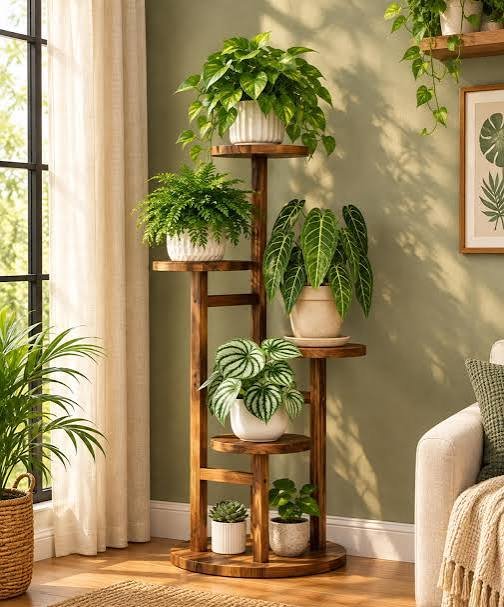
15. Use a Corner Plant Stand with Multiple Levels
A multi-level plant stand is a smart way to organize several houseplants in one small area. Its vertical structure allows you to display a collection without using much floor space.
Choose a stand that is stable and appropriately sized for the corner. Arrange plants according to their weight, light needs, and mature size.
Use larger containers on lower levels and smaller ones higher up. Trailing plants can be placed on an upper platform where their stems have room to hang.
A wooden stand creates a warm look, while a black metal design can complement a modern apartment.
Do not overload the stand or allow leaves to block access to other plants. Keep enough space for watering and cleaning.
16. Design a Small Indoor Garden Around a Bookshelf
A bookshelf can become a beautiful part of your indoor garden when you combine books with carefully selected plants.
Use a few open shelves to display compact planters between books and decorative accessories. A trailing plant on an upper shelf can soften the straight lines of the furniture.
Choose plants that fit the available light. Pothos, small peperomias, and other compact foliage plants can work well in suitable conditions.
Bookshelf plant styling tips:
- Place smaller pots on open shelves.
- Use one trailing plant on the upper level.
- Keep leaves away from books that may be damaged by moisture.
- Avoid overcrowding the shelves.
- Use waterproof trays beneath containers.
Always remove plants when watering if there is a risk of water spilling onto books or wooden furniture.
17. Create a Fresh Kitchen Corner with Indoor Plants
A small kitchen plant corner can make the room feel more welcoming and natural. Even if you have limited counter space, a narrow shelf or compact stand can provide room for a few plants.
Place a small plant display near a suitable window or under an appropriate grow light. You can use decorative foliage plants or grow a few culinary herbs if the lighting is sufficient.
Mint, parsley, and thyme may be useful options for a kitchen herb garden, although each herb has its own growing requirements.
Keep plants away from direct heat, cooking splashes, and areas where food is prepared. Choose containers with proper drainage and easy-to-clean surfaces.
A small collection of matching pots can create an organized appearance without taking over your kitchen.
18. Build a Low-Maintenance Indoor Plant Corner
If you have a busy routine, choose plants that do not require frequent watering or complicated care.
A low-maintenance plant corner can include a snake plant, ZZ plant, and suitable pothos variety. These plants are popular because they can adapt to ordinary indoor environments when their basic needs are met.
Choose attractive containers and arrange them at different heights. Use a small plant stand to create a finished appearance.
Simple maintenance tips:
- Check soil moisture before watering.
- Use well-draining potting mixes.
- Provide suitable light.
- Remove dead or damaged leaves.
- Inspect plants for pests.
- Avoid placing containers in extreme temperatures.
Remember that low-maintenance does not mean maintenance-free. Every living plant needs appropriate light, water, and occasional attention.
19. Create a Small Plant Corner with a Decorative Floor Lamp
A floor lamp and indoor plants can work together to create a comfortable decorative corner. This combination is especially useful in living rooms and reading areas.
Place a plant beside a floor lamp and add a small side table if space allows. Choose a plant with attractive foliage and a pot that matches the lamp’s finish.
A tall snake plant can complement a simple modern lamp, while a trailing plant on a nearby stand can create a softer look.
If the corner does not receive natural light, use a suitable grow light designed for plants. A regular decorative lamp should not automatically be considered a source of sufficient plant light.
Keep plant leaves and containers away from hot bulbs and electrical connections. The arrangement should be both attractive and safe.
20. Create a Cozy Indoor Plant Corner with Soft Lighting
Soft lighting can make an indoor plant corner feel warm and comfortable, especially in the evening. Combine greenery with gentle decorative lighting, natural materials, and simple furniture.
Start with two or three plants arranged at different heights. Place a medium-sized plant on the floor and smaller plants on a wooden stand.
Add a warm decorative lamp nearby, making sure it does not generate excessive heat around the foliage. If the plants need additional light for growth, use a separate grow light.
Neutral planters, woven baskets, and wooden furniture can help create a relaxed appearance.
This arrangement works particularly well in bedrooms, living rooms, and small apartment reading corners.
Best Indoor Plants for Small Apartment Corners
Choosing the right plants is important because small apartments have different lighting conditions and limited space. Some plants grow vertically, while others spread outward or develop long trailing stems.
The following options are commonly used for indoor plant corners.
| Indoor plant | Best decorative feature | Suitable placement |
|---|---|---|
| Snake plant | Upright leaves | Floor corners |
| ZZ plant | Glossy foliage | Living rooms |
| Pothos | Trailing vines | Shelves and hanging baskets |
| Spider plant | Arching leaves | Stands and shelves |
| Heartleaf philodendron | Heart-shaped foliage | Hanging displays |
| Peperomia | Compact leaf shapes | Small tables |
| Chinese evergreen | Patterned foliage | Suitable shaded rooms |
| Parlor palm | Soft tropical appearance | Larger corners |
| Hoya | Thick decorative leaves | Bright shelves |
| Cast iron plant | Broad green foliage | Lower-light corners |
Always check the requirements of the specific variety. Some plants tolerate lower light but still need artificial lighting if the room is extremely dark.
How to Arrange Plants in a Small Apartment
A successful plant corner should look attractive without interfering with everyday activities. Planning the layout before purchasing plants can help you avoid overcrowding.
Use Vertical Space
Small apartments benefit from vertical arrangements because they make use of walls and ceiling areas instead of taking up additional floor space.
You can use:
- Narrow plant stands.
- Wall-mounted shelves.
- Hanging baskets.
- Ladder-style plant shelves.
- Multi-level corner stands.
Choose supports that are secure and appropriate for the weight of the containers.
Mix Different Plant Heights
An arrangement with plants of different heights looks more natural and interesting.
Place the tallest plant toward the back, medium-sized plants in the middle, and smaller containers near the front.
Trailing plants can be used to soften the edges of shelves and stands.
Choose a Consistent Pot Style
Too many different pot colors and designs can make a small apartment look busy.
Choose two or three complementary finishes and repeat them throughout the arrangement.
Neutral shades, natural wood, and terracotta are easy to coordinate with many interior styles.
Leave Space for Growth
Plants change size over time. A small plant may develop longer stems or wider foliage as it matures.
Leave enough space between containers so leaves do not become tangled and plants receive adequate airflow.
Keep Watering Practical
Place plants where you can reach them easily. Avoid creating an arrangement that requires moving heavy furniture every time you need to water a plant.
Use removable inner pots and waterproof trays to protect floors and furniture.
How to Choose Indoor Plants for Low-Light Apartments
Not every apartment receives the same amount of sunlight. A room with a large north-facing window may provide different conditions from an interior room with no windows.
Before choosing plants, observe how much natural light reaches the intended corner.
Understand Different Light Conditions
Bright indirect light: The area receives plenty of daylight without strong direct sunlight falling on the leaves.
Medium light: The area receives moderate daylight, often from a window that is not immediately beside the plant.
Low light: The area receives limited daylight, and plant growth may be slower.
No natural light: The room has no meaningful daylight. Plants need suitable artificial lighting for long-term growth.
Understanding these differences helps you select plants that are more likely to remain healthy.
Select Plants According to Their Mature Size
A small apartment may not have room for a plant that grows several feet wide.
Check the mature height and spread before purchasing. Compact varieties are often easier to manage in narrow corners.
Consider Pet Safety
Some common houseplants can be harmful if pets chew or eat them. Pothos, philodendrons, snake plants, and ZZ plants are examples of varieties that should be kept away from pets.
If you have cats or dogs, research the safety of each plant before bringing it home. A hanging planter does not always prevent access because trailing stems can extend downward.
Common Mistakes to Avoid When Creating Indoor Plant Corners
Even a beautiful plant corner can become difficult to maintain if the arrangement is not planned carefully.
Adding Too Many Plants
A small apartment can quickly feel crowded when every corner contains multiple containers.
Start with a few plants and add more gradually. Focus on their health and placement rather than the number of pots.
Ignoring Light Requirements
A plant may look attractive in a corner but struggle if it does not receive enough light.
Choose plants according to the available conditions. Use suitable grow lights in rooms without sufficient natural light.
Overwatering Indoor Plants
Indoor plants may use water more slowly in low-light conditions.
Check the soil before watering and make sure the container has adequate drainage. Avoid allowing roots to remain in standing water.
Using Unstable Plant Stands
Tall stands can become unstable when overloaded or placed on uneven floors.
Choose a sturdy design and distribute weight carefully. Keep heavier pots on lower levels.
Blocking Windows and Walkways
A plant corner should not make it difficult to open windows, walk through rooms, or access furniture.
Keep leaves and containers within the planned area.
Choosing Pots Without Drainage
Decorative containers are attractive, but they must support healthy plant growth.
Use drainage holes or removable inner pots to prevent excess water from collecting around the roots.
Frequently Asked Questions
How do I create an indoor plant corner in a small apartment?
Choose one unused corner and start with two or three plants. Use a combination of floor pots, plant stands, and shelves to create different heights. Select plants that suit the available light and avoid overcrowding.
What are the best plants for small apartment corners?
Snake plants, ZZ plants, pothos, spider plants, and compact peperomia varieties are popular options. Their suitability depends on the available light and the size of the space.
How many plants should I put in one corner?
There is no fixed number. A small corner may only need two plants, while a larger corner can support a more layered arrangement. Leave enough space for airflow, growth, and watering.
Can I keep indoor plants in a corner without sunlight?
Some plants tolerate lower-light conditions, but all living plants need light. If the corner receives no natural light, use a suitable grow light for long-term growth.
How can I decorate an empty corner without using floor space?
Use wall-mounted shelves, hanging baskets, or a vertical plant display. These options allow you to add greenery without occupying much floor area.
Are indoor plants suitable for bedrooms?
Many houseplants can be displayed in bedrooms when their light, watering, and temperature requirements are met. Choose suitable varieties and avoid placing heavy containers above the bed.
Which pots are best for indoor plant corners?
Ceramic, terracotta, plastic, and lightweight resin pots can all be suitable. Choose containers with adequate drainage and a design that complements your apartment.
How do I keep my indoor plant corner looking organized?
Use coordinated pots, vary plant heights, remove damaged leaves, and avoid overcrowding. Regularly clean the surrounding shelves and stands to keep the display attractive.
Final Thoughts
A small apartment can have a beautiful indoor garden when you use empty corners thoughtfully. You do not need a large collection of plants or expensive decorating accessories to create an attractive green space.
Tall floor plants, wooden shelves, hanging baskets, ladder stands, and compact plant tables are all useful ways to display greenery. Choose plants according to the available light, select containers that fit your interior style, and leave enough space for healthy growth.
Start with a simple arrangement and build your collection gradually. With suitable plants and practical placement, even an unused corner beside a sofa, bookshelf, or bedroom window can become a fresh and welcoming part of your home.